Mirror.report – Landing Page Recreation
Click image to view full size
Project Overview
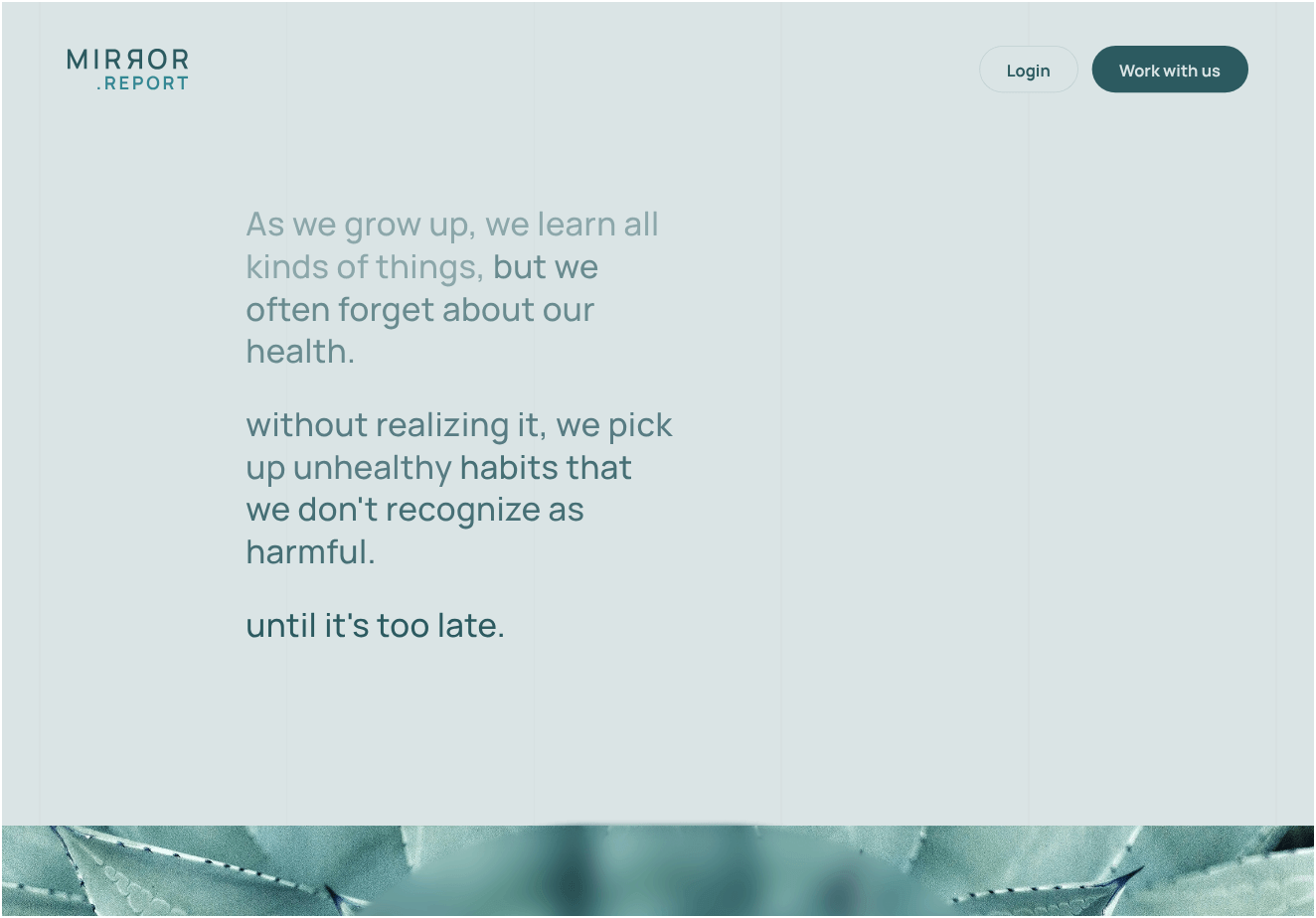
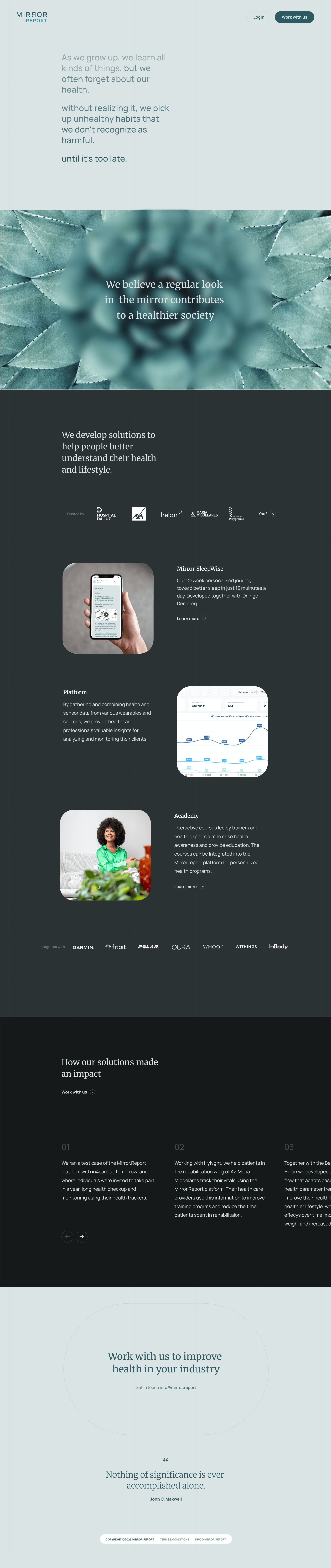
Mirror.report is a data-driven health platform that merges wearable and sensor data with coaching tools for clinicians, wellness coaches, and insurers. Their homepage features layered illustrations, animated UI components, and scroll-triggered storytelling, a design style that's clean, health-tech professional, yet very human.
I recreated the entire Mirror.report landing page inside Penpot, an open-source design tool. The challenge wasn't just to copy visuals, but to test how far I could translate a complex commercial interface into a more limited design environment – no animations, component auto-layout, or plugin support.
Why I made this?
I wanted to see how far static tools can go when precision and structure are the only things you can rely on. Mirror.report's site is layered and motion-rich, not something Penpot is naturally built for.
So the challenge became: Could I still capture hierarchy, rhythm, and balance without the motion layer? This wasn't about rebranding or rethinking; it was a pixel-faithful recreation exercise matching typography, grid proportions, and visual narrative while manually building every element from scratch.
Replication & Interpretation
This design started as a direct visual study of Mirror.report's landing page. I didn't aim to reinvent or brand-twist it, I aimed to mirror (pun intended) their real structure, with small adaptation choices only where Penpot required. The logo, palette, and typography follow their live brand. I retained layout hierarchy, section spacing, and visual rhythm. Where the original used parallax or motion emphasis, I balanced it with tonal contrast and shape layering instead.
More Penpot Projects